You’ve Got It All (NOC Application Results)

For God is not unjust so as to overlook your work. – Hebrews 6:10

After a whirlwind of a weekend, I finally decided to check my email. It’s strange because I usually check it every day. The one time I don’t, I actually get an important email– my NOC application results!

Well, here it is:

NUS OVERSEAS COLLEGES, JANUARY 2020 INTAKE

Congratulations! We are pleased to inform you that you have been offered a place in the NOC Singapore intake. 

In a matter of two lines, I got the results. It took a while for me to process the words, the feelings. To be frank, I had only ever considered my first two options (Israel and Munich) until recently when more and more reasons started to arise for me to want to stay in Singapore. I have been pretty blessed to have everything come full circle in this way. Drawing near to this date, I think there has always been a small nudging in my heart, “Maybe I wouldn’t mind staying in Singapore.” but I always thought that would be because I get rejected from the NOC programme entirely.

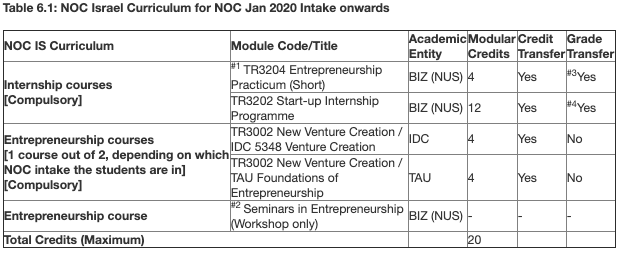
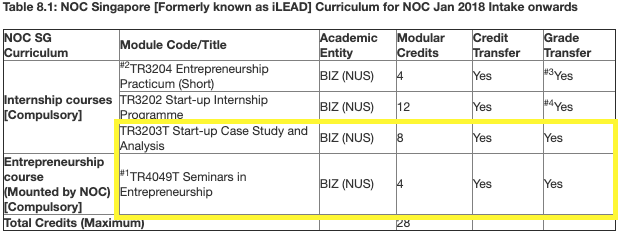
In a nutshell, for anyone who is reading this that may have a genuine interest in NOC programme, the curriculum for the overseas programmes and SG are practically the same. They both focus on teaching you the works of being an entrepreneurship, the only major difference seems to be that the SG programme carries slightly more modules (28 MCs vs the 20MCs for other 6-month programmes). From Figure 1 you can see that the main difference is in the last two modules, the start-up case study and the seminars. Notably, all the modules for NOC SG are credit-bearing, so if the ante isn’t already up for you, here it is.

Screenshot 2019-09-29 at 9.14.27 AMScreenshot 2019-09-29 at 9.14.35 AM.png
Figure 1. Curriculum overview from NUS Enterprise website

Independent and communal living seems to be a big part of the NOC experience so similar to the other programmes where you would be finding an apartment/flat with your programme-mates, for NOC SG you’ll be living on campus with the rest of the NOC SG programme attendees and alumni. The accommodation this time is in N-House, located at Sheares Hall, likely because it is near BIZ and NUS Enterprise making travelling for seminars and workshops a breeze. I’m looking forward to staying back on campus, even though it has only been one semester of being home. Don’t get me wrong, I love my parents but I definitely embraced the independence of campus life.

So at the end of the day, my thoughts are this: I’ve been given all that I wanted and maybe even more by accepting this opportunity, I’d be a fool not to accept it. When life gives you lemons, squeeze the hell out of it or make do, no? I’m happy to say that I have accepted the offer and we are already having our first briefing this coming Friday. Exciting times ahead, so for you dear reader, if you are considering your choices now, please consider what you want out of the NOC programme. Is it just to travel overseas? I’m telling you now that, I can already feel the pressure of what’s to come, but I tend to thrive off difficult situations. Your perseverance and personal motivations will bring you where you need to be. Don’t worry child, you’ve already got it all.

Week 5: The Business Behind Science

I always look forward to our field trips, so I would say that the highlight for this week would be the trip to NovogeneAIT. Before the trip, I had been to Biopolis before and I knew it to be a hub for government agencies and other government-supported research companies. From what Robson had shared during the tutorial, I had the impression that NovogeneAIT was a very big company (given that they had multiple sequencing centres around the world. I’m not sure if I was mistaken but I think he was referring to the sequencing centres of Novogene, right? NovogeneAIT being the joint venture only here in Singapore. In any case, this made me expect a much larger space, so I was very surprised when they gave us a tour of a much smaller area. Nevertheless, I think that this still impresses me because they are able to process a large number of genome samples even with this small space and equipment. It really speaks for how advanced the processing of the HiSeq and NextSeq they are using is, that these few machines alone can produce so many libraries.

On that note, it really interested me when they were talking about the eventual goal to be able to sequence a full human genome for just $100. In a matter of a few years, the price has gone down to just around a thousand dollars compared to how expensive it was before. That means that one day, sequencing will become so readily accessible at an affordable price, we might be able to advance research at an exponentially fast rate as well since genome sequencing is being applied in many scientific areas. On the other hand, it also implies the business race of manufacturing companies to design faster and more advanced processors to be able to handle even more data at a cheaper cost. Seeing the sequencing machines reminded me of the development of computers from really huge machines that take up an entire room to the laptops and iPads that we see today. I look forward to the day we will be able to have a table-top sequencer that can process as many samples as the latest model of NovaSeq today.

One of the confusing things for me was the fact that they still relied on physical servers, although they are looking at exploring cloud servers and cloud processing. One of the biggest limitations is that they have to clear the servers of old data after 45 days, and only the processed data is being backed up into their cloud server. What if a client wanted to retrieve old data that was past 45 days? Or what if they wanted the raw data for some reason? Data storage is a big issue for a company like NovogeneAIT that has to handle terabytes of data every day. I think that data management is really important not just for big companies but even on an individual level. Keeping things organised and backed up properly makes it easier if you need to pass on the data to someone else.

Week 4: More on CRISPR/Cas and NovogeneAIT

This week we had a more in-depth look at the CRISPR-Cas system for the lecture. I think that it is very exciting when you realise that we are still at the tip of the iceberg when it comes to understanding the role and functions of Cas proteins in bacteria. And yet we have already discovered Cas proteins that are able to not just produce a double-stranded break but produce a single-stranded nick and even sticky ends. Repeatedly, however, seems to be that the real bottleneck of this technology is managing the offsite targeting effects. This still leaves room for error and with regards to clinical therapeutics, this is definitely something that you would want to eliminate as much as possible. We are however in a time when CRISPR-Cas system gene therapy is likely to see way more applications, as scientists continue to understand the functions and possibly uncover more immunological defence systems in bacteria that may help us too. The assigned readings (and their diagrams) really helped me to understand the mechanism of the different Cas proteins because initially, it was difficult to conceptualise. And the lecture helped to consolidate my understanding by reiterating what I had read beforehand.

I must add that the guest tutorial by Novogene AIT was a good addition to the week as it fed my interest in the business aspect of biotechnology. It must be quite hard to “stay ahead of the competition” all the time and is probably not as simple as the speaker had made it be. Understandably there are probably some marketing strategies he is unable to reveal, even though I wanted to know how exactly do they have intel about the latest software, technology etc. Trend analysis is also something that interests me, so I was glad to hear about how they work towards trying to predict the needs of their clients beyond what they request from them, showing them that the company is able to provide more services (and at the same time making more profit!). The idea of master contracts is also pretty strategic, instead of just targeting individual labs. With Singapore being very small, however, I can see why geographic segregation is also necessary. This idea of a concerted effort really pays off, not just in business but in everyday life. It is not efficient to divide your energy in too many places. As a service provider company, working closely with government agencies/authorities is probably a good move too. In Singapore where the government nowadays concentrates its resources on a lot of data-driven projects, such contracts provide a lot of stability and reputability. Lastly, the speaker’s comment on being a service provider in today’s economy really struck out to me. Being someone who is currently thinking about having my own business one day, it was really relevant advice. With today’s sharing economy, being a service provider is very advantageous and this business model has a lot of potential given the right service in demand!

Week 3: SCIEX and CRISPR/Cas

I really enjoyed the field trip to SCIEX this week. I think that it is interesting to see how companies optimise their operations and also as a biotech company, how they continue to innovate and improve in an iterative fashion. They take into account not only customer feedback but even things like walking distance to optimise associate work efficiency.

As for the science technology, I think that its great that they are looking at forecasting the trends for mass spec analysis instead of just waiting on their customer demands. Having the best of both worlds in the QTRAP system is great for the future when we might be looking to analysing greater amounts in a shorter period of time, we will need to rely more on qualitative screening.

For lecture and reading, I enjoyed the review papers assigned to us. Gave me a comprehensive understanding of the mechanics of CRISPR/Cas9 system as well as the future modifications that can be done to it. Prof Liou did a good job in reiterating the reading material again, as well as the difference and advantages between RNAi and CRISPR. I think that RNAi has a lot of potential but it’s right to say that there is a lot of difficulty in getting it approved due to the off-target effects. Patisiran is the first RNAi approved as a therapeutic, so I think that there is way more that can be worked on this area.

Dealing with rejection

Today, the School of Computing (SOC) sent my rejection email for my Business Analytics Minor application.

I can’t describe how I feel other than to say I feel a tinge lost. Ever since I decided I would take the huge leap to switch my track to Business Analytics minor two semesters ago, I always thought I had a plan ahead of me. Looking at it, I’m not sure if that means I can no longer take any more business analytics mods. If that’s the case I will be more disappointed because I actually enjoyed the BT1101 mod I took the last sem, just that I really regret not investing more time into it.

Moving forward, I emailed someone to ask about it. Hopefully, it is a yes but I’m prepared for the no. This sem has really hit me with a load of reorganizing my initial study plan, so I’m not surprised if I have to do it again.

What I really hope is that I can move forward and continue to do better for all my other mods because I know this rejection is not the end for me, as much as it was an idealized scenario.

My Parents Told Me No

“We are never in lack of money.

We lack people with dreams, who can die for those dreams.”

– Jack Ma

My father was outraged when I told him I would be going to Pulau Ubin for 21 days. My mother cried when I informed her I would be staying on campus for 2 years. All my life, my parents have been very protective of me, but that has not stopped me.

I was constantly berated by my parents for wanting to do things that they deemed “girls shouldn’t be doing” such as sports and outdoor activities. Even as I was about to enter University, part of me still felt like a small girl, scared and unsure of what I could achieve. At that point, I knew I wanted to change their perceptions of me, and their perceptions of what a girl could and could not do. And so began my journey to prove them wrong, to relearn and rediscover the kind of person I want to be. Although it was painful to see them angry hurt initially, I wanted to seize the opportunities in front of me and I still do.

While I continue to walk this path of self-discovery each and every day, I know what fuels me is my desire for adventure and challenges. These two areas breed discomfort and uncertainty, of which push me towards excellence. I can never be better than I was yesterday if I don’t choose to challenge myself and open myself up to opportunities for learning. Gravitating towards experiences that further my personal growth, I one day want to be in a position as an entrepreneur to inspire other ‘small girls’ to take control of their potential.

End of June reflection

“When work becomes play, and play becomes work, your life unfolds.”

– Robert Frost

July is closing in and there is merely a week of June left. What an eventful few weeks it has been, indeed. Besides the fact that I got to take a short trip to Taiwan, right after my finals, one of my highlights for my summer so far has been the completion of my two main projects.

NUS Kayaking has been a huge part of my life and completing Legs & Paddles 2019 officially marked the end of my time with them. I know that deep down, I’ll still be helping them out here and there, but I want to shift my focus on new land.

My time as an assistant mentor for the 0319 batch of LSA wasn’t easy. I wasn’t able to fully commit my time and energy to it due to some family commitments and at the same time juggling work, school and Kayaking meetings. It was hard for me because I know that I was not fully present for my mentees, much less present for myself to learn from the experience. Nonetheless, I was pleasantly surprised when D-day came and the event was generally a smooth success.

Upon reflection, I really do enjoy my roles in both NUS Kayaking and as an OBS assistant mentor. Even though I wish I could be doing more of what I do in those positions at work, I realize that some areas overlap and I learn even more things outside of what I do in kayaking in OBS. Interning at SCALE was initially just a means for financial security during this summer, but now I’m starting to see how much I can really learn especially about business development and event operations from here. I’m excited for the weeks ahead, and secretly hoping for more work.

Reflections of a Life Scientist: The Impacts of Cities on Epidemiology

The exponential establishment of cities throughout the globe in the last century is without a doubt a marker of our technological and societal advancements as a human race. Better infrastructure and improved healthcare, are just a few of the many associated benefits of living in a city. At the same time, we cannot ignore the negative impacts of the establishment of cities. In particular, with regards to the realm of life sciences, cities have been a huge curveball for all living beings, the environment, and not forgetting the scientists who study them. Cities have introduced a multitude of new factors for scientists to consider. In epidemiology especially, there are new challenges presented every day to the scientists who already have the difficult task of understanding the complex field of diseases and their transmission. This essay will focus on the challenges and changes that epidemiologists and other scientists in the field, like myself, face as a result of the establishment of cities in the past decade.

  In the field of epidemiology, studying the of risk factors of a disease or infection is crucial in understanding its spread. As scientists, we need to be sensitive about the factors that help exacerbate or proliferate diseases and illnesses within a population in order to accurately study its transmission and growth mechanisms. With the rapid establishment of cities in the last century, we have introduced into the equation a completely new set of risk factors– the urban environment and everything else that comes along with it. For instance, the establishment of cities has brought about a change in lifestyle for people, and epidemiologists are seeing an increase in noncommunicable diseases or lifestyle-related diseases as well as mental health issues (Hubacek & et al., 2009). While it is true that cities bring better access to healthcare and technology, this has greatly changed the trends of morbidity and mortality (McKeown, 2009). In many countries with booming cities, there is a sharp rise in the ageing population (World Health Organisation, 2011).

  There is extended morbidity despite the lower rate of mortality because people in cities are living longer, but it does not always translate to a better quality of life. In developing countries where more are moving to cities, more elderly are left without informal care from their families or relatives (World Health Organisation, 2011). On the same note, noncommunicable diseases exponentially increase with age, therefore the increasing elderly population in the world is not only a societal and economic burden but a challenge for scientists to keep up with too (Yoshikawa, 2000; World Health Organisation, 2018). Hence, epidemiologists are faced with a new understanding of how cities influence this new age of diseases.

  Where there are people, there is a chance to transmit disease; Cities multiply this effect by the hundredfold, by bringing people physically closer together. Generally, cities are characterised to have a higher population density than their rural counterparts. Hence, contact with another person is much more imminent. The high population density in cities increases the propagation of infectious diseases, including those that transmit by air, bodily fluids, water and other vectors (Lee, 1994; Monteiro & et al., 2006). Cities are at greater risk of spreading infectious diseases, not just because of their high population density but their greater connectivity with the rest of the world and other cities (Alirol & et al., 2011). With over 35,000 international flights in a day, Singapore Changi Airport was dubbed the most connected airport in the Asia Pacific region (OAG, 2018). Imagine the scale at which an infectious disease could be spread to the rest of the world from there. It could easily result in a global pandemic, similar to that of the various strains of influenza in the past (Pattemore & Jennings, 2008) and more recently, Ebola virus (Park & et al., 2015). Of course, that is why health organizations and governments worldwide are so wary of such an event happening (Barnes, 2018). The greater the speed of transmission of diseases within cities is important to understand and morphs today’s modern approach to epidemiology. As diseases evolve at a terrifying rate (Leventhal & et al., 2015), scientists need to look closely at cities and how they can more accurately model the transmission of disease based on human networks.

  In the face of urbanisation, epidemiologists cannot take for granted the state of affairs when it comes to diseases. Upon reflection, my approach to learning about the transmission of diseases has changed because of the establishment of cities, more so because I live in one. As mentioned previously, there has been a shift in prevailing diseases amongst cities, a rise in noncommunicable diseases and age-related diseases. In Singapore, the ageing population is a real concern. Projections estimate that Singapore may be the fifth most elderly populated country in a matter of almost 30 years (United Nations, 2015). This makes studying the epidemiology of ageing and its associated diseases, even more, relevant for me. I have become more sensitive to the risk factors in urban environments. I have also had to change the way I perceive research and my scientific method when it comes to dealing with the confounding effects of cities on my research in this area. Being in a city, such as Singapore, I get to enjoy the comforts of better infrastructure and in turn, better technology. However, I often do not notice the over-reliance on technology as a scientist in a city. Internet connection is a ‘basic necessity’ nowadays. And as a student, it is hard to imagine a life without it, let alone having to do literature reviews and research without the vast pools of e-libraries and repositories at my fingertips. Moreover, most modern laboratories in cities are well-equipped with air-conditioning and huge freezers to store cell samples, consuming “three to four times more energy than the average building” according to a study by Eades (2018). Therefore, in the laboratory, I try my best to be more energy-saving and environmentally conscious when carrying out my research. Trying as much as possible to use glass-stirrers instead of disposables ones, and doing simples things like turning off the fume hood when not in use, I choose to reduce the carbon footprint of my laboratory.

  As much as my research is important, it is just as important to try to reduce the negative impacts brought about by the establishment of cities. If not, scientists would just be adding on to the impacts caused by cities, and we already have enough problems to face as it is. With no sign that the growth of cities is going to slow down any time soon, we should be very aware of the novel challenges that studying diseases in cities pose. I strongly believe that understanding cities is vital to understanding diseases in the 21st century, and eventually how to control them.
Why I decided to start a business

“Pursue your passion they say, follow your dreams they say!” But what if you didn’t know what that dream or passion might look like? Often times, as young people we mould our ideas and perspectives based on whatever is around us. So like most Singaporeans going through the public system of education, I was surrounded by the idea that STEM was the way to go. I was good at it, liked it, and was convinced that I loved it.

In Singapore, there is an abundance of research/STEM exposure for pre-tertiary students. Personally, I’ve participated in Math Olympiads, and research symposiums during my secondary school days (high school equivalent). And I really did enjoy it. I could see myself doing that as a career- or so I thought at the time. Currently, I’m coming to the end of my second year in university, doing a major in Life Sciences. While I still enjoy what I learn, these past four semesters have allowed me to open my eyes to what I am good at and what I am genuinely interested in. I had come to university with the end in mind: study life sciences with a minor in psychology. That’s it. My STEM background in secondary school and junior college (pre-university) had really shaped my motivations in what I wanted to pursue. I could not imagine myself doing anything else, because how could I when I did not know what else was out there?

Now comes the meat of this post, why I decided to start a business or more precisely what changed my career perspectives. So in my first semester, I took what has now become quite a dreaded module for all ‘non-computing’ undergrads: CS1010S. CS1010S is basically an introductory course to programming methodology, in my case it was taught in python. The ONLY reason why I took it at the time was that it was a compulsory module for all faculty of science undergrads. Let me tell you, as someone who was never exposed to the idea of computing, it was a pure nightmare. And it was not just because it was difficult for me to learn, but there seemed to be a stigma towards the subject in the first place. The other students from the faulty of science that were taking the course with me had a very discouraging attitude towards the module. It seemed that everyone was taking it for the sake of completion. I guess I picked up the same sentiments along the way. After the module, I knew I enjoyed learning about it but I told myself I wouldn’t touch computing again.

Fast-forward to my second semester, I was seriously considering a change in my major. I questioned why I was still studying what I was studying. A friend of mine was going through a similar crisis and we talked about what we would seriously consider doing after graduation. Would I be satisfied with doing research? Why am I afraid to venture elsewhere? Those were the questions in my head and that was the beginning of some serious thought into becoming self-employed. And so it began: the two of us started throwing business ideas back and forth, but nothing concrete was ever done. Dreamers on a cloud. Another semester passed, and I was still lacking direction.

Finally, enough was enough. I was either going to stop dreaming and do something about it, or stop dreaming and move on. I chose the former. I actively sought out ways to improve myself in terms of the technical skills I would need to start a business, interestingly enough that included taking another programming module in my third semester. Despite struggling to learn Java (a whole new world beyond what I did in my first semester), I was so glad I did because it really got me interested in the power of technology in businesses and problem-solving.

January this year, my friend (now business partner) and I have started on our milestones for this year. We began our marketing research, which is a topic for another day. I switched my plans to a business analytics minor.

Now, why I’m sharing this is also partly to document my journey but at the same time, I hope to encourage young people (in Singapore especially) of two things.

  1. Don’t be boxed in by what you choose. (There’s still time to explore other options.)

  2. If you want to do something, make small steps towards achieving those goals. (As cliche as it sounds.)


Hellü friend please don’t run away

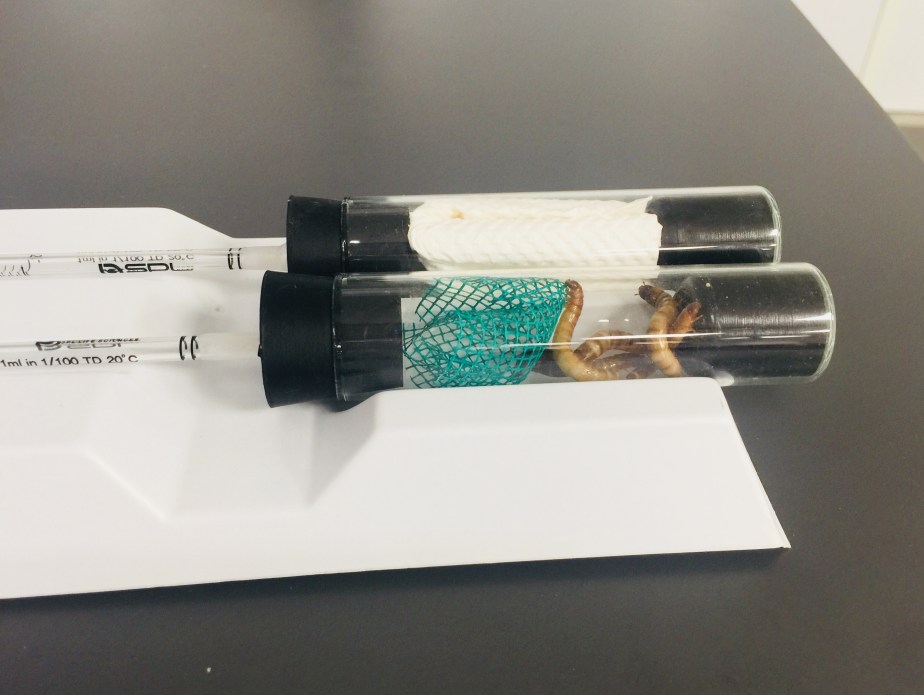
LSM2231 lab session was pretty fun today when we had to monitor the respiration behavior of mealworms and crickets. The crickets were super jumpy. One of them even jumped out and had a tour of the lab.

When crickets are kept at lower temperatures they should have lower respiration because their metabolism lowers, hence breathing less. We didn’t really get to see these results but issok I had fun.